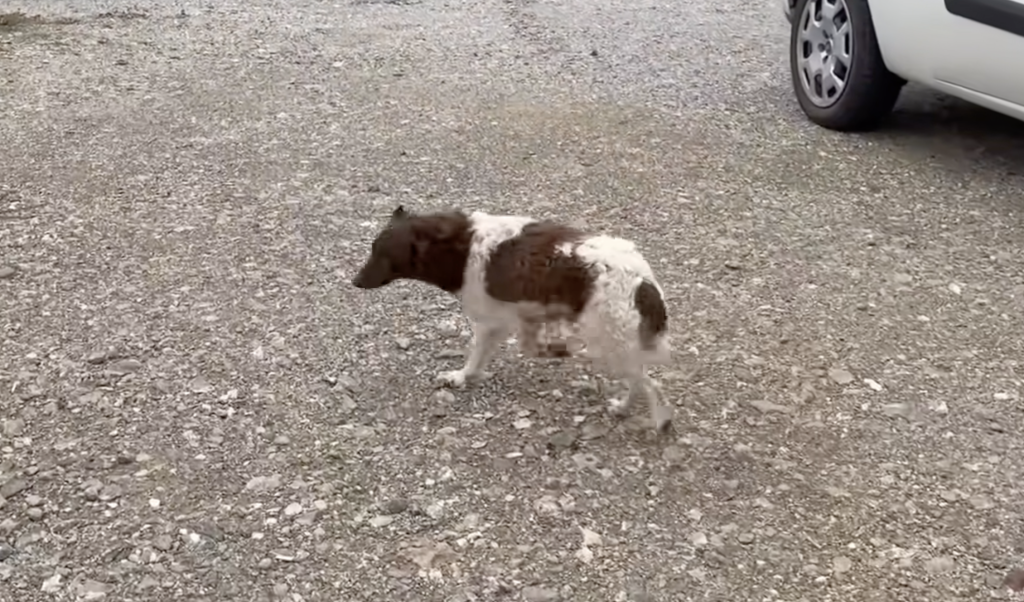
On a quiet, gray morning in a small Serbian town, a thin mother dog appeared outside a local animal rescue shelter. Her body trembled softly, her fur was tangled and dull, and her ribs showed faintly beneath her short coat. But it was her eyes—gentle, brown, and filled with a quiet sadness—that captured everyone’s attention. She didn’t bark, cry, or beg. She simply stood there, shifting her weight as if she couldn’t decide whether to stay or run. Yet something in the way she held herself told the rescuers she wasn’t truly alone. There was intention behind her fear, a purpose behind her visit.
One of the rescuers, a kind-hearted man who had seen many abandoned animals come through those doors, slowly crouched down. Speaking softly, he asked, “Where are your babies?” For a moment, the dog locked eyes with him, as if she understood every word. Then, without hesitation, she turned and began to walk away—pausing every few steps to make sure he was following.
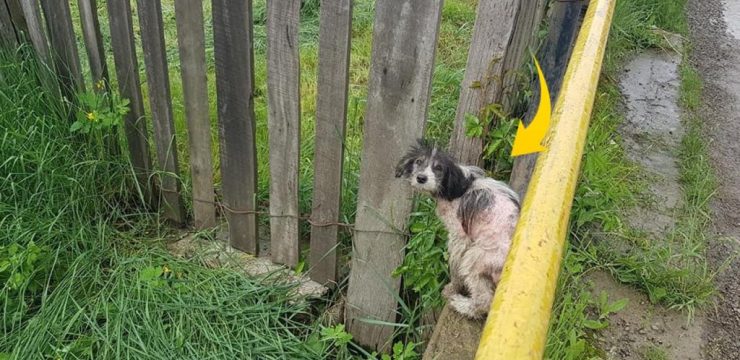
Intrigued and concerned, he followed her through the village. The mother dog moved with surprising determination. Her tail hung low, but a faint wag suggested a fragile thread of hope. Her steps were quick, almost urgent, guiding him down a narrow road lined with old wooden fences. They passed onto a dirt path where tall, overgrown grass brushed against their legs. The air was damp, carrying the earthy scent of wet leaves and moss. As he walked, the rescuer realized this journey was one she had made many times before.
Finally, she stopped at a small opening beneath a rusted metal fence. She lowered herself and slid through effortlessly, glancing back once more to ensure he was still behind her. When the rescuer ducked and squeezed through the same gap, he stepped into a forgotten yard, overrun with weeds and wrapped in an eerie quiet.
Near an old shed stood another dog—a male, larger but equally thin. His ears perked up, and though cautious, he didn’t bark or growl. Instead, he watched the newcomer with a steady, protective gaze, as though guarding something he held dear.
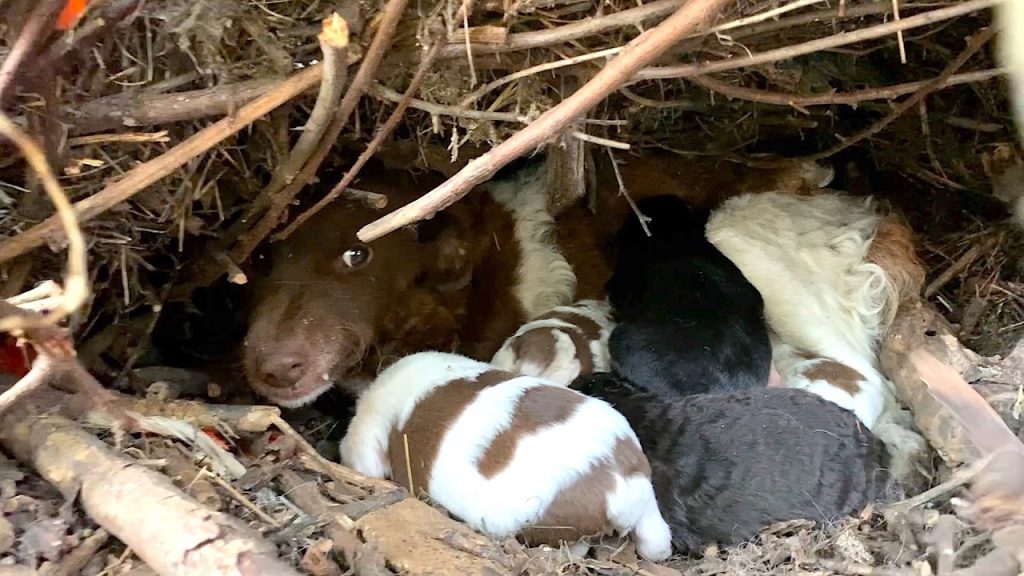
Then the rescuer heard it—a faint, fragile whimper. Turning toward the sound, he noticed a mound of old hay tucked into a sheltered corner beside the shed. Moving slowly and respectfully, he approached. There, nestled in the straw, were six tiny puppies, no more than two weeks old. Their eyes were barely open, their movements weak but determined, small bodies curling into one another for warmth. The mother immediately settled beside them, her instincts sharp and unwavering.
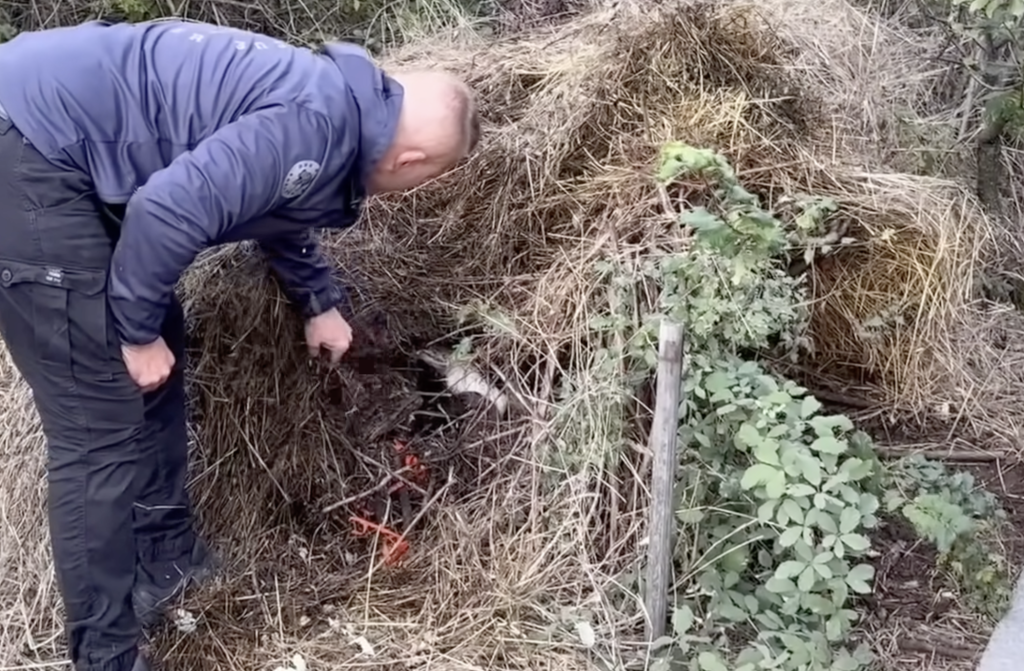
It was a sight both heartbreaking and beautiful. This brave mother had walked all the way to the shelter not for herself, but for her babies. She had risked everything, trusting a stranger to help her family survive.
At first, she stiffened when the rescuer reached toward the puppies. A soft growl rose in her throat—a mother’s natural instinct to protect. But then something remarkable happened. The father dog, who had been standing guard, stepped forward. His stance softened, his head lowered, and he gave a small, gentle wag of his tail. It was as though he was telling her, “It’s all right. They’re here to help.”
That single gesture shifted the entire moment. The rescuer knelt down, speaking softly, letting the mother dog sniff his hands. Her breathing remained fast and anxious, but she no longer pulled away. Inch by inch, trust formed between them. Eventually, she allowed him to stroke her side—a simple touch, but a powerful bridge between fear and hope.
One by one, he carefully lifted the puppies from their nest and placed them into a small carrier lined with blankets. The mother’s eyes followed every movement, wide but no longer frantic. When the last puppy was safely placed inside, she sniffed the carrier gently, then turned toward her mate. The father dog responded with another tender wag, offering his silent reassurance.
With the entire family secured, they were brought back to the shelter. The moment they stepped inside, warmth replaced the morning chill. Soft light filtered through the windows, and the clean scent of fresh straw filled the room. For the first time in a long while, the little family had a safe place to rest.
The father dog—once so vigilant—began to tremble, not from cold but from relief. He nuzzled each puppy before lying down beside them. The mother curled protectively around her babies, finally able to relax. She looked up at her rescuers, her eyes reflecting trust instead of fear.
As the hours passed, the puppies slept peacefully, their tiny bellies rising and falling in steady rhythm. The mother occasionally lifted her head to check on each one, her expression soft and devoted. The rescuers kept their distance, giving her the space she needed while quietly observing the tender scene before them.
What made this moment so powerful wasn’t just the rescue—it was the silent understanding shared between the dogs and the humans who stepped in to help. The mother’s courage, the father’s steady patience, and the compassion of the rescuers created a story that touched everyone who witnessed it.
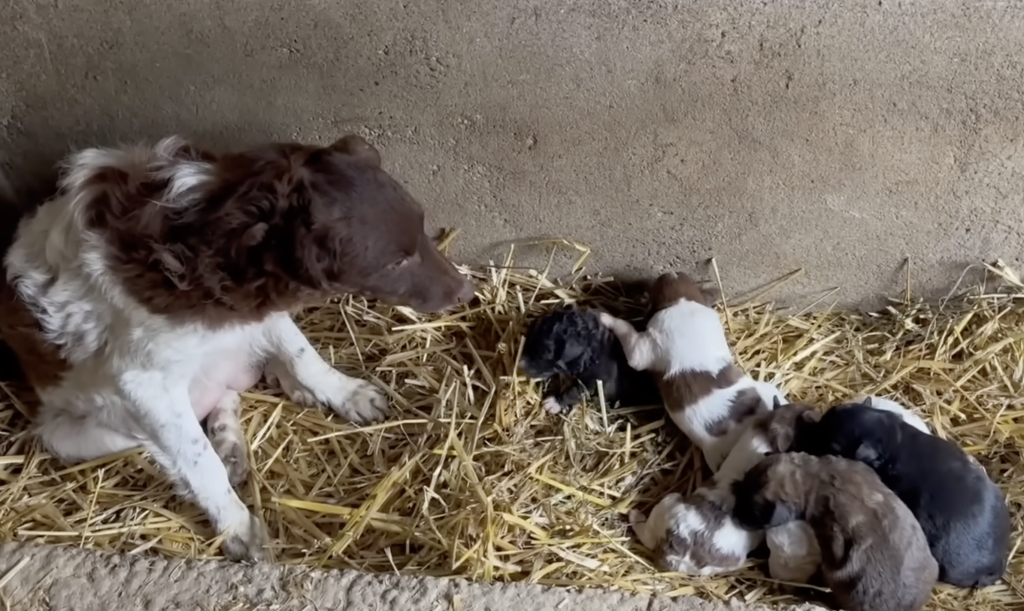
Over the days that followed, the family thrived. The puppies grew stronger and more curious. Their eyes brightened, their tiny barks filling the room with life. The mother regained her strength, her coat shining again. The father, once cautious, grew playful and affectionate, nuzzling the rescuers’ hands whenever they walked by.
They had endured hardship, but now they were safe—surrounded by warmth, food, and unwavering care. The staff often commented on how inseparable the pair remained. They were always close, watching over their little ones together.
This simple yet deeply meaningful story reminds us that animals, too, feel love, fear, hope, and remarkable loyalty. That frightened mother knew exactly where to turn for help. She placed her faith in human kindness and, in doing so, saved her entire family.
Moments like this renew faith in the bond that connects all living beings. They remind us that compassion doesn’t need words, that trust can grow even in silence, and that the smallest creatures often show us the truest forms of courage and love.