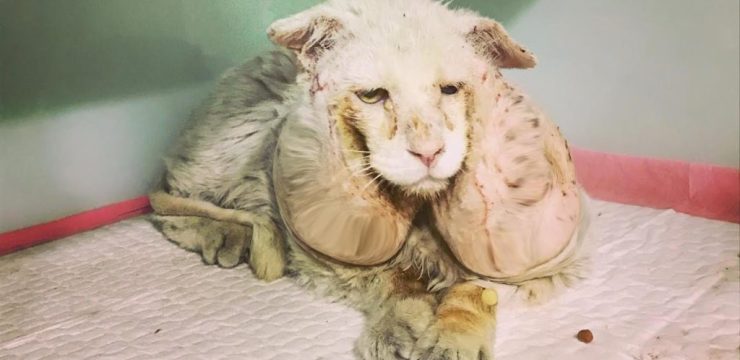
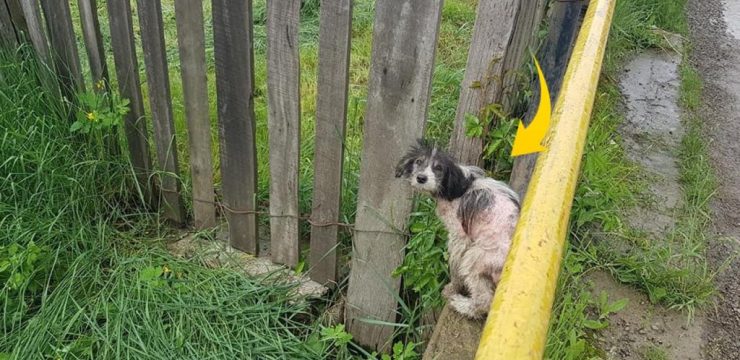
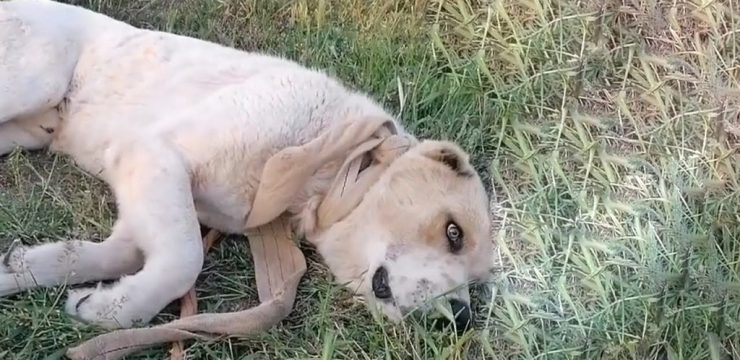
Leonard was discovered as if he’d been tossed aside without a second thought—frail, filthy, and barely clinging to life. Weighing only four kilograms, his fragile little body spoke volumes about the hardship he had endured. His fur had fallen out, his skin was inflamed with painful sores, and he was crawling with fleas. Worst of all, he was suffering from severe demodectic mange. His legs were so swollen they looked nearly twice their normal size, making every small step a struggle. His eyes, red and exhausted, could barely stay open. Whoever abandoned him didn’t just walk away from a dog—they turned their backs on a living soul desperate for compassion.
It was the kind of phone call no rescuer ever wants to receive, yet always answers without hesitation. When the rescue team arrived and saw Leonard up close, they were stunned by the extent of his suffering. But beneath all that pain, there was still a flicker of life—tiny, fragile, but undeniably present. And sometimes, that tiny flicker is all it takes to begin a miracle.
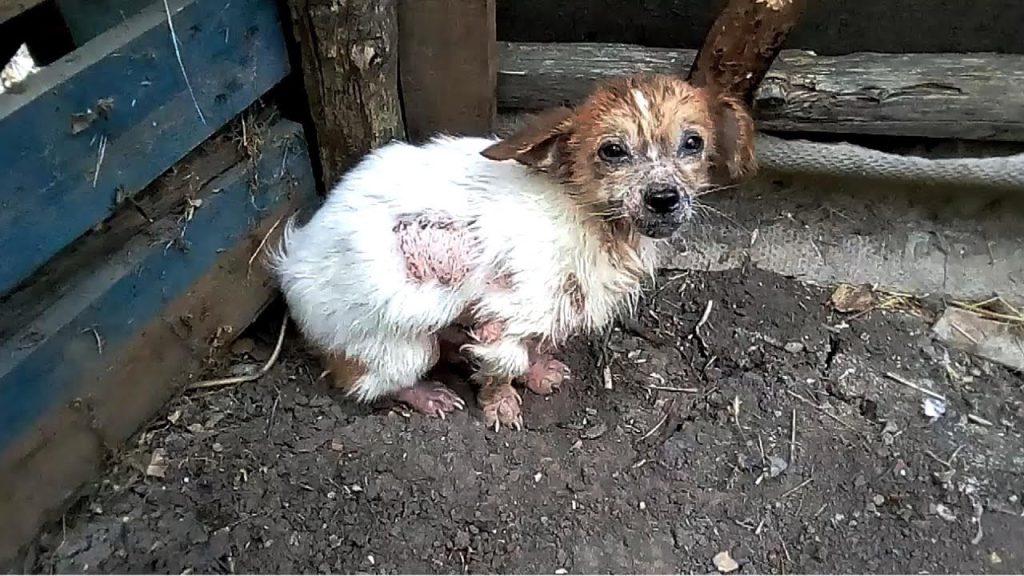
Leonard was rushed straight to a veterinary clinic. Every second felt urgent. The medical team moved with quiet focus, examining his weakened body, starting treatments, and gently giving him his first medicated bath. He didn’t resist. If anything, the warm water seemed to calm him, as though he sensed—for the first time in far too long—that someone finally cared enough to help him.
Those early days were critical. He received medications to fight the mange and reduce the swelling in his legs. Fleas were removed one by one. His wounds were cleaned, his bedding kept soft and fresh. Caregivers stayed close, checking on him through the night, making sure he never felt alone. Progress didn’t come in dramatic leaps, but it came in small, hopeful steps—a little less swelling, a little more brightness in his eyes, the tiniest wag of a tail that had once hung limp with exhaustion.

The shelter soon became Leonard’s sanctuary. Giving him a name marked a new beginning. He no longer belonged to the cold streets or the painful past that abandoned him. Now he was Leonard—a survivor with a team of people rooting for him. Volunteers played their part too, feeding him soft meals, comforting him during restless evenings, and celebrating every bit of progress as if it were a life-changing achievement.
Week after week, Leonard transformed. His once patchy, thin coat began to grow back—soft, warm, and a gentle golden brown. The swelling in his legs went down, and he started walking without pain. His eyes, once red and clouded with discomfort, grew clearer and kinder. Slowly, his spirit caught up with his healing body. He wagged his tail more often, sniffed the air with curiosity, and responded to the voices calling his name. It was as if he was rediscovering the world—and his place in it.
One unforgettable moment marked a turning point: about a month into his recovery, Leonard stepped into the shelter’s play yard with new strength. His head was held higher, his tail wagged confidently, and there was a spark of joy in his steps. The same dog who once collapsed under the weight of misery now moved with the lightness that love and care had restored.
But Leonard’s journey didn’t end with recovery. It unfolded into something even more powerful—a sense of belonging.
A compassionate woman had been following his updates from the start. She’d seen the photos, read the stories, and felt her heart pull toward him. To her, Leonard wasn’t just a rescue dog; he was meant to be part of her life. When she finally met him, Leonard approached with gentle caution. But within moments, it was clear they shared a quiet understanding. He rested his head in her lap and sighed softly, as if recognizing the safety he had waited so long to find.
That very day, Leonard went home.
Clean, healthy, and cherished, he stepped into a life he never could have imagined. No more cold concrete floors. No more hunger or fear. Instead, he found himself surrounded by comfort—a warm bed, soft blankets, and a gentle voice calling his name with affection. For the first time, he belonged to someone who would never abandon him.
Leonard’s story is filled with hardship, yes, but it is equally rich with resilience, compassion, and the remarkable power of love. It stands as a reminder that no being is ever too broken to heal, and no act of kindness is ever too small to change a life. In a world where it can feel easy to turn away, Leonard’s journey encourages us to lean in, to show up, and to believe in transformation even when hope seems faint.
For those in the later seasons of life, Leonard’s recovery may feel especially meaningful. We understand what it means to endure, to be overlooked, to wait for someone willing to help us rise again. Leonard’s healing mirrors our own silent battles—those moments where courage is quiet, progress is slow, and hope returns little by little.

As we age, we learn that healing doesn’t always arrive quickly and love doesn’t always show up loudly. Sometimes it’s found in the steady presence of someone who keeps showing up. In the gentle encouragement that reminds us we still matter. Leonard’s story teaches us that there is beauty in every comeback, strength in every gentle moment, and joy waiting just beyond the hurt.
So if you’ve ever felt forgotten, remember this: like Leonard, you are not alone. There is always someone willing to care. And often, the smallest, most fragile beings end up offering the greatest lessons.
Because hope—when given the chance—returns stronger than we ever imagined.